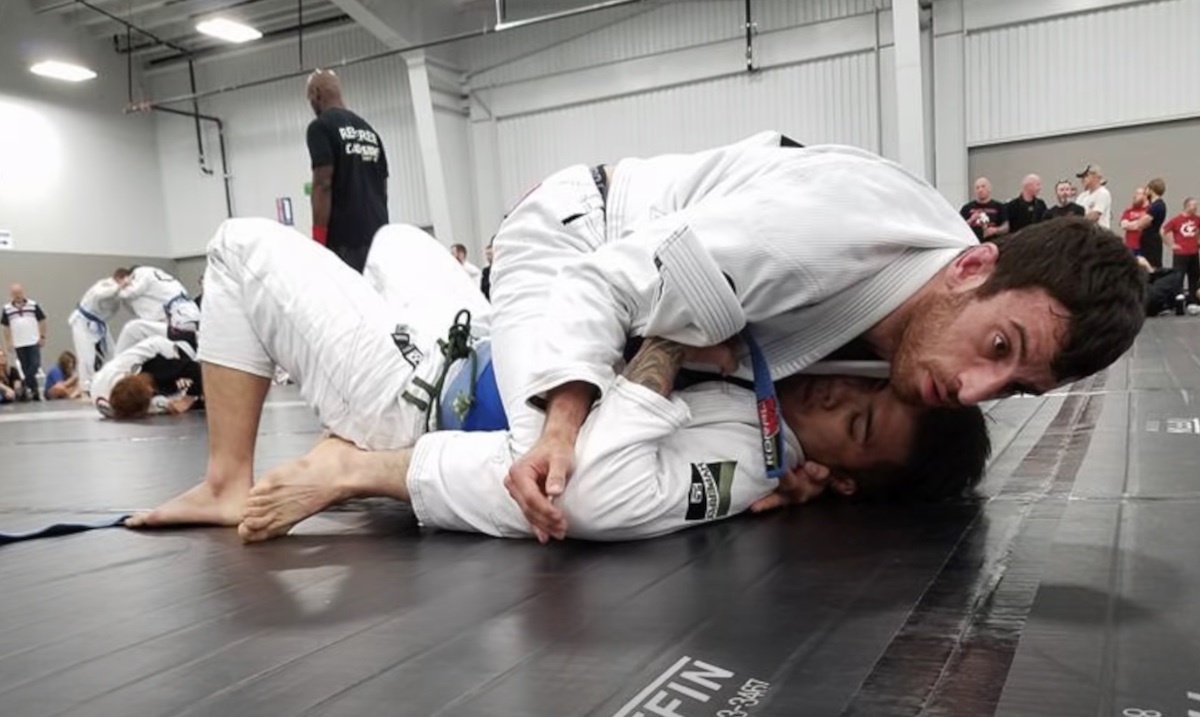
Various martial arts around the world practice their fighting form in some type of training Gi. But have you ever wondered the origins of the Gi and how they were developed?
Well wonder no more, because we’re going to give you the full story on the origins of the Gi. Going over who developed the martial arts Gi and the various martial arts that adopted wearing His for their practice.
The origins of the Gi
The martial art Gi was first introduced during the late 1870s within the grappling art of Judo. It was first created and designed by the founder of Judo, Grandmaster Jigoro Kano.
When developing Judo, Kano realized that normal clothes were too weak to meet the demands of grappling in Judo. He needed a more sturdy training uniform that was made of durable material that could withstand hard grappling training.
What Kano got inspiration from was the clothing Japanese firefighters would wear at the time. These early firefighters would battle fires in heavy hemp jackets and pants that were durable and more flame retardant.
This was exactly what Kano was looking for to design and create the training garb for Judo. This would lead to the birth of the very first martial arts Gi.
What does the name Gi mean?
Many don’t know the significance of the word Gi. The word Gi is actually part of a larger compound word that is the original name for this training uniform.
That word, which was coined by Grandmaster Kano, was called a “keikogi.” Keiko is the Japanese word for practice and the word Gi translated to dress or clothes.
Put the two words together and you get training clothes. As years went on the training uniform would be shortened to just Gi.
What martial arts use a Gi within them?
The martial arts that use a type of Gi include:
- Aikido
- BJJ
- Judo
- Japanese Jiu Jitsu
- Karate
- Kendo
- Sambo
- Taekwondo
The Judo Gi
Of course, Judo was the first martial art to implement the Gi since the martial art’s founder Jigoro Kano developed it. These Gis were designed to be durable and used for years in training without breaking down.
A regulation Judo Gi looks very similar to a Brazilian Jiu Jitsu Gi, but has some noticeable differences. Most notable, the sleeves are shorter and competitors will even pull them up higher to prevent opponents from grabbing them.
Judo Gis come in multiple colors, but for competitions the only types of colors Gis allowed are white and blue.
The Karate Gi
The Karate Gi or dogi was the second variation of the Gi that was created after the Judo Gi. It was developed by one of the Karate’s founders Gichin Funakoshi, who was a friend and training partner of Jigoro Kano.
Funakoshi had two specific reasons for adopting the Gi into Karate. The main reasons why the Gi was adopted into Karate was to make the martial art more formal and marketable.
Before Gis were implemented, Okinawan Karate practitioners would practice in their street clothes. People from the mainland of Japan had social clashes with the Okinawans and saw them as inferior brutes.
To be able to market Karate to mainlanders, the Gi would be a way to make it more formal and professional. Early on, Karatekas used Judo Gis, but the Karate Gi started to get developed to meet the martial art’s demands.
Their style of Gi was a much lighter and shorter sleeves to allow more range of motion on strikes.
The Brazilian Jiu Jitsu Gi
Brazilian Jiu Jitsu was the third martial art to adopt the Gi since it was a direct evolution from Judo. But we wouldn’t see the development of an official BJJ Gi until many years later.
Most of the early BJJ practitioners would also use a Judo Gi until BJJ Gis were developed. BJJ and Judo Gis are very similar, but the BJJ Gi sets itself apart with two distinct features.
A BJJ Gi has longer sleeves that allow for different types of guard play and the lapels are longer. Also in BJJ competitions, they allow more colors than just white and blue like in Judo competitions.
The Sambo Gi
Sambo being another martial art that evolved from Judo also implements a style of Gi, but just the top. This top is called a kurtka or sambovka and is worn with wrestling shoes and shorts to complete the Sambo uniform.
This Sambo Gi and uniform was developed by the Russian military mixing the styles of Judo and wrestling together. The kurtka looks very similar to a Gi top used in Judo, but with some very distinct differences.
A kurtka has belt loops around the waist of the top and also shoulder straps to make grips during grappling. They are only made in blue or red as those are the permitted colors for a regulation Sambo competition.
The Kendo Gi
A Kendogi or is more like the traditional attire that samurais would wear outside of battle. It is a semi long sleeve robe like shirt and an extra long skirt called a hakama that reaches the floor.
This design was created to allow for free motion for a practitioner when they are training with their Kendo stick. The material that a hakama is made out of is an extra lightweight cotton material that doesn’t way down the student.
Traditionally, the Gi tops in Kendo either come in black,navy blue, or white and the hakama is black.
The Aikido Gi
Aikido was also inspired by Judo to develop their own Gi, which is called an Aikidogi. There are different styles of Aikidogi, but the original design that is still the most used was developed in the 1960s.
A Japanese company that made Judo Gis consulted Aikido teachers from the famous Hombu school in Japan. They wanted to make a Gi specifically for Aikido and what they came up with is the Aikidogi’s present form.
It looks similar to a Judo Gi, but the biggest difference is that the sleeves are shorter and extra wide. Allow for the type Aikido practitioners to practice the type of counter arm throws they are known for.
An Aikido Gi is made in three styles, which are lightweight, standard, and heavy.
The Taekwondo Gi
The Taekwondo Gi or dobok is the uniform worn within this martial art. In Korean, the word do means way and bok means clothing, which is similar to the Japanese word keikogi.
A dobok was designed based off of the Karate dogi, but has a very distinct design. This uniform has even wider pants and sleeves than the Karate Gi, which allow for full range of motion on kicks.
Doboks are generally all made of lightweight materials, so as not to restrict any movements or slow down a Taekwondo practitioner. They come in various colors to match whichever team is wearing them.
What materials are used to make Gis?
A Gi is made with a variety of different materials depending on the style and which martial art they are used in. Some of the most known materials to make martial arts Gis include:
- Cotton
- Synthetic Cotton
- Polyester
- Cotton/Polyester Blend
- Canvas
- Rice Grain
- Hemp
- Ripstop
The most commonly used materials to make Gis is either cotton or a cotton polyester blend. Materials like hemp or rice grain are some of the more high end materials used to make martial arts Gis.
What type of stitching is used to make Gis?
There are generally 4 different types of stitching used to make martial arts Gis. Those types of stitching include:
- Single Weave
- Double Weave
- Pearl Weave
- Gold Weave
Most types of Gis are made with single weave stitching and more high end ones having either pearl or gold stitching. But those high end stitchings are generally just for BJJ or Judo Gis.
Modern day Gis
The martial art Gi has been a symbol of many martial arts and has a special history. As martial arts continue to grow, so has the technology to make the Gis that the practitioners within them wear. There are now numerous martial arts companies that make a wide array of martial arts Gis.
LowKickMMA.com




 Chris should of rocked his ass ctfu https://t.co/7QiGoA6EnS
 pic.twitter.com/ckoDsDCYPn
 T O
 V E R A (@chitoveraUFC) March 28, 2022





 -CSO-


 # MexicanBecauseYouAre # MoneyToBeMadeTheyDontWant # Retaliation
 Tactics pic.twitter.com/eCVjonwN5S
 ufc is not for you, you gave up



 pic.twitter.com/FoP9E1ib2t

 (@TheArtOfWar6) March 23, 2022

File under: Lowkickmma.com | Leave a comment »